Table of Contents
The roar of the crowd fades into a distant hum as your fingers hover over the keyboard, heart pounding in sync with the final seconds of a championship match. For esports professionals, this isn’t just gaming—it’s high-stakes performance where a single missed keystroke can unravel months of preparation. Mechanical keyboards aren’t mere peripherals in this arena; they’re precision instruments honed to deliver split-second responsiveness and unwavering reliability under immense pressure. Understanding what separates a tournament-ready board from a casual setup is crucial for anyone serious about competing at the highest level.
Gone are the days when a generic keyboard sufficed for competitive play. Today’s esports landscape demands hardware engineered for the unique physiological and psychological demands of professional gaming. We’re talking about switches that register inputs faster than human reaction times, builds that withstand the rhythmic fury of rapid-fire commands, and features that minimize distractions during critical moments. This guide cuts through the marketing noise to focus on the tangible attributes that genuinely impact performance, reliability, and endurance—because when victory hinges on milliseconds, your keyboard must be an extension of your intent, not a potential point of failure.
Top 10 Mechanical Keyboards for Esports Players
Detailed Product Reviews
1. FL ESPORTS CMK98 Wireless Mechanical Gaming Keyboard with Number Pad, Tri-Mode Hot Swappable, 99 Key Custom Keyboard, Linear Switches, Gasket Creamy, RGB for Win/MAC

Overview:
The FL ESPORTS CMK98 is a 99-key wireless mechanical keyboard targeting gamers and professionals seeking versatility. It features a creamy gasket-mounted structure, tri-mode connectivity (Bluetooth 5.0, 2.4GHz, USB), and linear switches pre-lubed for smooth operation. Designed for Windows and macOS, it emphasizes customizability and acoustic refinement.
What Makes It Stand Out:
Its standout elements include a multi-layer gasket structure with silicone dampeners for exceptional sound absorption and typing comfort, plus hot-swappable sockets (3/5-pin compatible) enabling tool-free switch/keycap changes. The 4000mAh battery supports extended wireless use, while 1.68M RGB lighting and full macro programmability cater to immersive setups.
Value for Money:
Priced mid-range, it justifies cost through robust build quality, wireless flexibility, and premium acoustic tuning rarely found at this tier. Competitors often sacrifice battery life or gasket mounts for similar pricing, making it a compelling upgrade from entry-level boards.
Strengths and Weaknesses:
Strengths: Exceptional noise reduction; seamless multi-device switching; durable PBT keycaps; comprehensive customization. Weaknesses: No dedicated media keys; RGB software lacks per-key customization; gasket mount may feel too soft for rapid typists.
Bottom Line:
Ideal for users prioritizing typing feel and wireless freedom, the CMK98 delivers professional-grade acoustics and versatility. A top pick for hybrid work/gaming setups, though hardcore competitive gamers might prefer stiffer stabilizers.
2. Redragon K668 RGB Gaming Keyboard, 108 Keys Wired Mechanical Keyboard w/Extra 4 Hotkeys, Sound Absorbing Foams, Upgraded Hot-swappable Socket, Mixed Color Keycaps x 2 Sets, Red Switch

Overview:
The Redragon K668 is a full-size wired mechanical keyboard boasting hot-swappable Red switches, dual keycap sets, and vibrant RGB lighting. Aimed at budget-conscious gamers, it emphasizes modularity and visual flair with 108 keys, including four extra shortcut keys for enhanced functionality.
What Makes It Stand Out:
Dual PBT keycap sets (mixed colors) allow instant aesthetic swaps, while upgraded hot-swap sockets support nearly all switches without soldering. Integrated sound-absorbing foam minimizes noise, and 19 onboard RGB modes—plus music-sync lighting—create dynamic atmospheres without software.
Value for Money:
Outstanding for its price, offering hot-swap capability, dual keycaps, and premium foam dampening typically seen in costlier models. Competes well against $80+ boards by packing pro features into an affordable package.
Strengths and Weaknesses:
Strengths: Dual keycap variety; excellent noise control; intuitive onboard RGB; sturdy build. Weaknesses: Software-dependent macro customization; limited wrist ergonomics; RGB software interface feels dated.
Bottom Line:
A superb entry point for modders and RGB enthusiasts, the K668 excels in customization and value. Best for casual gamers wanting tactile flexibility without breaking the bank, though ergonomic needs may require a wrist rest.
3. Redragon Mechanical Gaming Keyboard Wired, 11 Programmable Backlit Modes, Hot-Swappable Red Switch, Anti-Ghosting, Double-Shot PBT Keycaps, Light Up Keyboard for PC Mac

Overview:
Redragon’s K671 is a wired mechanical keyboard focused on reliability and accessibility, featuring hot-swappable Red linear switches, 11 backlight modes, and double-shot PBT keycaps. It balances gaming performance with office-friendly functionality for Windows and macOS users.
What Makes It Stand Out:
Its plug-and-play simplicity shines with 11 onboard backlight effects (adjustable speed/brightness) and true anti-ghosting across all keys. The inclusion of four spare switches and two red keycaps aids DIY repairs, while macro editing via software streamlines workflow customization.
Value for Money:
Highly economical, delivering hot-swap capability and PBT keycaps under $60. Though RGB is less dynamic than rivals, its focus on core mechanics and included spares offers tangible savings over pricier “gimmick-heavy” alternatives.
Strengths and Weaknesses:
Strengths: Beginner-friendly hot-swap; durable PBT keycaps; robust anti-ghosting; generous warranty. Weaknesses: No RGB color customization; basic software; backlighting lacks per-key control.
Bottom Line:
Perfect for first-time mechanical keyboard users or budget-focused multitaskers, the K671 nails fundamentals with reliable switches and spares. Prioritize it for productivity over flashy gaming—ideal if RGB depth isn’t critical.
4. Redragon K556 RGB LED Backlit Wired Mechanical Gaming Keyboard, 104 Keys Hot-Swap Mechanical Keyboard w/Aluminum Base, Upgraded Socket and Noise Absorbing Foams, Quiet Linear Red Switch

Overview:
The Redragon K556 merges premium materials with modularity, featuring a full aluminum top plate, hot-swappable Red switches, and noise-dampening foams. This 104-key wired board targets enthusiasts wanting a sturdy, customizable foundation for gaming or typing.
What Makes It Stand Out:
The aircraft-grade aluminum base ensures exceptional rigidity and a premium aesthetic, while the “99.8% switch-compatible” hot-swap sockets simplify modifications. Integrated sound-absorbing foams and 20 onboard RGB modes (with music sync) enhance both acoustics and visual appeal.
Value for Money:
Competitively priced under $80, it rivals $100+ boards with its aluminum construction and near-universal switch compatibility. The metal build justifies the slight premium over plastic Redragon models, offering longevity without compromising modularity.
Strengths and Weaknesses:
Strengths: Tank-like aluminum durability; superior noise reduction; seamless switch swapping; rich RGB versatility. Weaknesses: Heavy weight limits portability; no dedicated macro keys; software required for advanced macros.
Bottom Line:
A standout for users craving a no-nonsense, metal-clad hot-swap keyboard. The K556 is a future-proof investment for tinkerers and typists, though its weight may deter LAN tournament attendees.
5. Logitech G413 SE Full-Size Mechanical Gaming Keyboard - Backlit Keyboard with Tactile Mechanical Switches, Anti-Ghosting, Compatible with Windows, macOS - Black Aluminum

Overview:
Logitech’s G413 SE is a minimalist full-size wired keyboard emphasizing durability and precision, featuring tactile mechanical switches, a brushed aluminum top case, and white LED backlighting. Designed for serious gamers and professionals, it foregoes RGB for understated elegance.
What Makes It Stand Out:
Its aircraft-grade aluminum frame delivers unmatched sturdiness, while PBT keycaps resist shine and wear. Tactile switches provide satisfying feedback for accurate keystrokes, and the clean white backlighting ensures readability without distraction—ideal for competitive or low-light environments.
Value for Money:
Priced at a premium, it competes with mid-tier RGB boards but excels in build quality and switch reliability. The 2-year warranty and Logitech’s reputation justify the cost for users prioritizing longevity over flashy extras.
Strengths and Weaknesses:
Strengths: Premium aluminum construction; ultra-durable PBT keycaps; responsive tactile switches; clean aesthetic. Weaknesses: Limited to white backlighting; only 6K rollover (vs. N-key); no hot-swap capability.
Bottom Line:
A refined choice for professionals and esports athletes valuing precision and durability. Skip if you crave RGB or customization; embrace it for its no-compromise build and tactile excellence in high-stakes scenarios.
6. RK ROYAL KLUDGE R98 Pro Wired Mechanical Keyboard, 96% Creamy Gaming Keyboard RGB Backlit with Number Pad and Volume Knob, Gasket Mount, MDA Profile PBT Keycaps, Hot Swappable Pre-lubed Linear Switch

Overview:
The RK R98 Pro is a 96% layout wired mechanical keyboard targeting enthusiasts seeking a premium typing experience. It combines a space-saving design with a full number pad, gasket mounting, and pre-lubed linear switches, emphasizing acoustic quality and ergonomics for both gaming and productivity.
What Makes It Stand Out:
Its standout features include a multi-layer sound-absorbing foam system delivering a “thocky,” creamy sound profile, MDA-profile PBT keycaps for enhanced finger comfort and durability, and a detachable aluminum volume knob. The hot-swappable PCB (3/5-pin) and pre-lubed cream switches offer immediate smoothness, while programmable RGB and online driver support enable deep customization for Windows/Mac users.
Value for Money:
Priced mid-range, it offers exceptional value by bundling premium elements typically found in higher-cost custom builds—gasket mount, foam tuning, high-quality PBT keycaps, and hot-swap sockets—into an accessible prebuilt package. It undercuts boutique alternatives while including a numpad, which many compact boards omit.
Strengths and Weaknesses:
Strengths: Excellent sound dampening, comfortable MDA keycaps, versatile 96% layout, reliable hot-swap functionality, and intuitive volume control. Weaknesses: Wired-only connectivity limits flexibility, RGB software can be unintuitive, and MDA profile may feel steep for shallow typists.
Bottom Line:
An outstanding choice for typists and gamers prioritizing sound quality and ergonomics in a wired, numpad-friendly form. Its build and features justify the cost, making it a top recommendation for creamy, thocky enthusiasts seeking plug-and-play refinement.
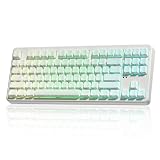
7. FL ESPORTS NX87 Military-Grade Wireless Mechanical Keyboard - 110-Day Battery Life, Hot-Swappable Switches, Triple Mode 5-Device, Thock Sound & RGB - Dominates FPS/3A Gaming (Win/Mac/iOS/Android)
Overview:
The FL ESPORTS NX87 is a wireless TKL mechanical keyboard engineered for endurance and competitive gaming. It emphasizes ultra-low latency, multi-device versatility, and an industry-leading battery, targeting gamers and professionals needing reliability across multiple systems.
What Makes It Stand Out:
Its defining feature is the colossal 10,000mAh battery, promising up to 110 days of use (RGB off) or 5 days at max RGB—a significant leap over competitors. Triple-mode connectivity (Bluetooth 5.0, 2.4GHz, USB-C) supports 5 devices, while a multi-layer foam/silicone sound system delivers deep “thock” acoustics. Hot-swappable sockets and instant keystroke registration cater to FPS/3A gamers.
Value for Money:
While premium-priced, the NX87 justifies cost through unmatched battery life, seamless multi-device switching, and military-grade durability claims. It outperforms similarly priced wireless boards in longevity and reduces long-term accessory costs (e.g., fewer dongles).
Strengths and Weaknesses:
Strengths: Revolutionary battery endurance, flawless multi-device integration, satisfying thock sound profile, hot-swap convenience, and robust build. Weaknesses: Bulky design, RGB customization software is basic, and the plate-mounted knob lacks tactile feedback.
Bottom Line:
A near-perfect pick for multi-device users and competitive gamers demanding zero charging anxiety. Despite minor software quirks, its battery supremacy and responsive performance make it a must-consider for wireless enthusiasts.
8. Attack Shark ajazz AK820 Mechanical Gaming Keyboard with Knob 75% Keyboard Hot Swappable Type-C Wired Gasket 5-Layer Noise Absorbing Foam White LED Backlit NKRO Linear Red Switch for PC/Win/Mac-Black

Overview:
The A.JAZZ AK820 is a wired 75% gasket-mounted keyboard prioritizing acoustic refinement and portability. It targets users seeking a compact, travel-friendly board with premium sound dampening and customization, sans RGB.
What Makes It Stand Out:
Its five-layer foam system (EVA, IXPE, PET, silicone) eliminates plate ping for a pure “thock” sound, while the CNC volume knob offers precise control. Hot-swappable sockets, pre-lubed linear red switches, and north-facing white LEDs enhance usability. The 1.2mm PCB slotting optimizes key stability and softness.
Value for Money:
Competitively priced for its feature set, the AK820 delivers exceptional value with gasket mounting, full hot-swap support, and extensive foam tuning rarely seen at this tier. It undercuts rivals like the Keychron Q series while matching their build quality.
Strengths and Weaknesses:
Strengths: Superb noise isolation, comfortable OEM keycaps, reliable knob functionality, and lightweight portability. Weaknesses: Monochrome backlighting lacks vibrancy, software customization is limited, and the white LED may feel dated versus RGB.
Bottom Line:
Ideal for minimalist typists who value acoustic quality and portability over flashy lighting. Its focus on fundamentals—sound, feel, and durability—makes it a stellar budget-conscious investment for productivity-focused users.
9. Newmen GM611 Mechanical Keyboard,Rainbow LED Backlit Gaming Wired Keyboards Compact Mini 61 Keys Portable 60 Percent Mechanical Keyboard with Black Keycaps,for Windows Laptop PC Linear Red Switches

Overview:
The Newmen GM611 is a no-frills 60% wired mechanical keyboard designed for portability and space efficiency. It targets beginners or travelers needing a compact, affordable board with essential gaming features.
What Makes It Stand Out:
Its ultra-compact 61-key layout maximizes desk space, while 19 rainbow backlight effects and double-shot luminous keycaps create visual appeal. N-key rollover and anti-ghosting ensure reliable input during intense gaming, and the detachable cable enhances travel readiness.
Value for Money:
As one of the most affordable 60% mechanical boards, it offers strong entry-level value. The inclusion of linear red switches, decent backlighting, and plug-and-play simplicity makes it accessible, though it lacks premium materials found in costlier models.
Strengths and Weaknesses:
Strengths: Highly portable, vibrant RGB at low cost, reliable anti-ghosting, and easy setup. Weaknesses: Plastic build feels lightweight, no hot-swap capability, limited software customization, and lacks numpad/media keys.
Bottom Line:
A solid budget starter kit for students or casual gamers needing portability and basic RGB. While not built for hardcore enthusiasts, its price-to-function ratio makes it a smart pick for minimalist setups.
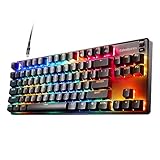
10. SteelSeries New Apex 9 TKL – HotSwap Optical Mini Keyboard – TKL Esports Design – Optical Switches – RGB Customization – Aluminum Alloy Frame – Double Shot PBT Keycaps
Overview:
The SteelSeries Apex 9 TKL is a premium tenkeyless optical-mechanical keyboard built for esports. It leverages optical switch technology for speed and durability, targeting competitive gamers who demand precision and rapid actuation.
What Makes It Stand Out:
OptiPoint optical switches enable 33% faster actuation (0.2ms response) and dual-point actuation (1mm/1.5mm depth adjustment), eliminating debounce delays. The hot-swap support, aircraft-grade aluminum frame, and double-shot PBT keycaps ensure longevity, while per-key RGB and esports-focused TKL layout optimize performance.
Value for Money:
Positioned at a high price point, it justifies cost through cutting-edge optical tech, pro-grade build, and SteelSeries’ Sonar software ecosystem. It competes with top-tier boards like the Razer Huntsman but offers superior switch customization via hot-swap.
Strengths and Weaknesses:
Strengths: Blazing speed, robust aluminum construction, versatile actuation depth, and excellent PBT keycaps. Weaknesses: Optical switches lack tactile feedback for some, software can be complex, and premium cost may deter casual users.
Bottom Line:
A top-tier choice for esports athletes prioritizing speed and reliability. Its innovative optics and esports pedigree deliver tangible competitive advantages, making it a worthy splurge for serious competitors.
Core Performance Demands for Esports Keyboards
The Critical Role of Actuation Speed and Consistency
In high-pressure esports scenarios, the speed at which a key registers a press (actuation point) and the consistency of that registration across all switches are non-negotiable. Professionals seek keyboards where the actuation point is shallow enough for rapid keypresses yet precise enough to avoid accidental triggers. Consistency ensures every keypress, whether the first or the thousandth in a marathon session, delivers identical feedback and response, eliminating unpredictability that can derail complex combos or crucial movement sequences during intense gameplay.
Minimizing Input Lag: Beyond the Basics
While wireless technology has advanced significantly, the absolute minimal input lag remains a top priority. Esports keyboards designed for competition prioritize direct USB connections or ultra-low-latency wireless protocols specifically validated for sub-millisecond response times. Crucially, it’s not just about the connection; the internal processing speed of the keyboard’s controller and its polling rate (how frequently it checks for input) are meticulously optimized to ensure keystrokes hit the game engine with near-zero delay, a factor where even fractional milliseconds matter.
Ghosting and Anti-Ghosting: The Multi-Key Imperative
Complex in-game maneuvers often require pressing multiple keys simultaneously—think movement, ability activation, and communication all at once. Ghosting, where the keyboard fails to register certain key combinations, is unacceptable in competition. Professional-grade boards implement robust N-key rollover (NKRO), typically via USB or PS/2 interfaces, ensuring every single keypress in any combination is accurately detected and transmitted without conflict, providing absolute confidence during the most demanding sequences.
Understanding Switch Technology for Competitive Edge
Linear vs. Tactile: The Esports Preference Spectrum
Switch choice fundamentally shapes a player’s interaction with the game. Linear switches (smooth press without tactile bump) dominate in fast-paced genres like first-person shooters (FPS) due to their consistent, rapid keystroke execution ideal for rapid tapping and quick directional changes. Tactile switches (with a subtle bump indicating actuation) find favor among some MOBA and strategy players who value the feedback for precise ability casting or menu navigation, though the tactile bump can sometimes slow down repeated rapid presses compared to linear options.
Optimizing Actuation Force and Travel Distance
The force required to press a key down (actuation force) and the total distance the key travels (travel distance) directly impact speed and fatigue. Many esports professionals gravitate towards switches with lighter actuation forces (around 45g) and shorter total travel distances. This combination allows for faster key recovery between presses and reduces finger strain during extended tournament play, enabling sustained peak performance without compromising control. Heavier switches might offer more deliberate input but often sacrifice the raw speed required for top-tier competition.
Switch Durability: Counting on Millions of Keystrokes
The sheer volume of keystrokes executed during professional play demands exceptional switch longevity. Tournament-grade keyboards utilize switches rated for 80 million, 100 million, or even higher keystroke lifespans. This durability ensures consistent performance throughout grueling practice schedules and multi-day tournaments without the degradation in feel or responsiveness that cheaper switches might exhibit, providing reliable muscle memory over the long haul.
The Stabilizer Factor: Consistency Across Larger Keys
Stabilizers are crucial mechanisms under larger keys (like spacebar, enter, shift) to prevent wobble and ensure even activation across the keycap. In high-speed play, inconsistent stabilizer performance can lead to missed or unintended inputs. Professional esports keyboards feature meticulously tuned, often lubricated, stabilizers (typically costar or plate-mounted designs) that deliver smooth, rattle-free presses identical to smaller keys, maintaining uniformity and reliability across the entire keyboard surface.
Build Quality and Ergonomic Essentials
Rigid Plate Construction: Eliminating Flex for Precision
A keyboard’s plate—the metal or rigid plastic layer holding the switches—must be exceptionally sturdy. Flex in the plate during forceful typing distorts switch actuation and creates inconsistent feedback. Esports-focused boards utilize thick aluminum, steel, or high-density composite plates that provide a rock-solid foundation. This rigidity ensures every keypress feels identical, regardless of where on the keycap it’s struck, which is vital for maintaining accuracy during rapid, dynamic inputs.
Weight and Stability: Anchoring Performance
Tournament environments are dynamic, with players leaning, gesturing, and executing forceful keystrokes. A keyboard that slides or shifts mid-game is disastrous. High-performance esports keyboards incorporate substantial weight through dense materials (like thick aluminum tops) or integrated, non-slip rubberized bases. Some even feature adjustable feet or dedicated mounting systems to lock the board securely to the desk surface, ensuring absolute stability even during the most aggressive play sessions.
Cable Management and Connectivity Options
A well-designed braided cable with robust strain relief prevents tangles and accidental disconnections—a nightmare scenario mid-match. While wired remains the absolute standard for zero-latency certainty in major tournaments, premium wireless options with dual-mode (2.4GHz dongle + Bluetooth) are increasingly viable for practice, provided they offer verified ultra-low latency and long battery life with quick charging. Secure cable routing channels on the keyboard itself are also a thoughtful touch for maintaining a clean, snag-free setup.
Keycap Material and Profile: Grip and Feel Under Pressure
PBT plastic keycaps are the professional standard due to their superior durability, resistance to shine (unlike ABS), and textured feel that maintains grip even during sweaty, high-intensity matches. The keycap profile (the shape and height) significantly impacts comfort and speed. Lower-profile keycaps (like DSA or OEM) or subtly sculpted profiles (like Cherry) are often preferred over very tall keycaps (like DCS) as they reduce finger travel distance and allow for faster lateral movements across the keyboard, crucial for FPS strafing and rapid key transitions.
Advanced Features for the Competitive Arena
Programmable Layers and On-the-Fly Macros
Beyond basic key remapping, advanced esports keyboards offer multiple programmable layers. This allows players to create complex, context-specific keybindings (e.g., different binds for different heroes or game modes) accessible via a dedicated layer toggle key. While complex macros are often restricted in official tournaments, simple, single-key macros for essential functions like quick-chat commands or resolution switching can be invaluable for streamlining communication and setup during events.
Per-Key RGB with Purpose: Focus Over Flash
While flashy RGB is common, professional esports keyboards implement it with intentionality. The ability to finely tune per-key brightness and color is critical. Players often configure subtle, low-brightness lighting focused only on essential keys (WASD, keybinds) to maintain situational awareness in darkened arenas without causing visual distraction or eye strain during long sessions. Software should allow saving multiple profiles for different games or lighting environments.
Dedicated Tournament Mode
A physical switch or easily accessible software toggle for “Tournament Mode” is becoming essential. This instantly disables non-essential keys (Windows key, function keys prone to accidental presses), deactivates RGB lighting to eliminate potential distractions or reflections, and often enforces a high-polling-rate, minimal-latency profile. This one-touch safeguard prevents catastrophic accidental keypresses during critical match moments.
Integrated Media Controls and Volume Wheel
Quick, silent access to volume control (especially for communication) and media playback/pause is highly valued. A dedicated, easily reachable volume knob (often magnetic for secure placement) or dedicated media keys allows players to adjust comms volume or mute background music instantly without fumbling for function keys or navigating software, keeping focus entirely on the game during crucial transitions or breaks.
Environmental and Practical Considerations
Noise Profile: Balancing Feedback and Discretion
While satisfying tactile or clicky feedback is personal, excessive noise can be disruptive in shared practice facilities or broadcast environments. Many pros now opt for linear switches with dampened housings or tactile switches that minimize the audible “clack” while retaining the necessary physical feedback. Sound-dampening foam inside the case is also a common feature in high-end boards to reduce hollow ping and overall operational noise without sacrificing switch feel.
Portability for the Pro Circuit
Esports professionals travel constantly for tournaments. While full-size boards dominate home setups, portable tenkeyless (TKL) or 75% layouts are increasingly common carry options due to their reduced footprint and weight. However, the trade-off between portability and having the full numeric keypad (used by some strategy players) is a personal decision heavily influenced by the specific game title and player preference. Durability during transit is paramount for any travel board.
Cleaning and Maintenance Accessibility
Intense practice schedules lead to dust, debris, and potential liquid exposure. Keyboards designed with esports in mind often feature hot-swappable switch sockets (allowing switch replacement without soldering) and easily removable keycaps using standard pullers. A design that facilitates quick cleaning—like minimal crevices and smooth surfaces—helps maintain performance and hygiene over time, preventing sticky keys or inconsistent actuation from grime buildup.
Future-Proofing with Firmware Updates
The competitive landscape evolves, and so do hardware needs. Keyboards with robust, regularly updated firmware via manufacturer software allow for critical improvements: refined polling rates, enhanced macro capabilities within tournament rules, better wireless stability, or even subtle adjustments to key response curves. This ongoing support ensures the keyboard remains competitive and adaptable well beyond its initial purchase date.
Frequently Asked Questions
How critical is switch type for esports performance compared to other factors?
Switch type is foundational as it directly dictates the speed, feel, and fatigue level of your inputs. While build quality and anti-ghosting are essential prerequisites, the switch’s actuation point, force, and feedback profile are the primary determinants of your raw input performance and consistency during extended play.
Is wireless latency truly negligible for professional esports in 2026?
While premium wireless technology has made massive strides with dedicated 2.4GHz dongles achieving latency often indistinguishable from wired in controlled tests, the absolute zero-risk guarantee of a direct USB connection remains the mandated standard in most major esports tournaments. Wireless is excellent for practice but wired is still king for official competition.
Why do esports players prefer PBT keycaps over ABS?
PBT keycaps are significantly more durable, resisting the shine and wear that ABS keycaps develop quickly with heavy use. They also have a slightly textured surface that maintains better grip during sweaty sessions, crucial for maintaining finger placement and accuracy during high-pressure moments.
Does keycap profile significantly impact gaming speed?
Yes, absolutely. Lower-profile or subtly sculpted keycap profiles (like DSA or OEM) reduce the vertical distance your fingers need to travel between presses and allow for smoother lateral movement across the keyboard surface compared to very tall profiles. This translates directly to faster key transitions, especially important in fast-paced genres.
Are heavier switches ever beneficial for esports?
Generally, lighter switches (around 45g actuation force) are preferred for speed. However, some players in precision-oriented genres (like certain strategy games) might find slightly heavier linear switches (50-60g) offer better control for deliberate, single-key inputs, reducing accidental presses, though this often comes at a slight cost to maximum tapping speed.
How important is N-key rollover (NKRO) for actual gameplay?
NKRO is non-negotiable for serious competition. Complex in-game actions frequently require pressing 5, 6, or even more keys simultaneously (movement + abilities + communication). Without true NKRO, critical inputs can be missed due to ghosting, which is completely unacceptable when every input matters.
What’s the real benefit of a volume wheel on a gaming keyboard?
A dedicated, easily accessible volume wheel allows for instantaneous, silent adjustment of communication volume during matches or breaks—critical for hearing team calls clearly without fumbling for function keys or software sliders, which could cause accidental keypresses or break focus.
Does sound-dampening foam actually improve gaming performance?
While primarily reducing noise, sound-dampening foam also eliminates the “ping” or hollow sound caused by switch stems vibrating against the case. This results in a more consistent, solid feel across all keys, which can subtly enhance muscle memory and reduce auditory distraction during play.
Why are stabilizers so important for esports performance?
Poor stabilizers cause larger keys (spacebar, enter) to feel wobbly, inconsistent, or require uneven force to press. In high-speed play, this inconsistency can lead to missed inputs or unintended presses on adjacent keys. Well-tuned stabilizers ensure every keypress, regardless of size, feels uniform and reliable.
Can programmable layers give a competitive advantage?
Yes, when used within tournament rules. They allow players to map complex sequences or context-specific actions to single keys or simple combinations, reducing finger travel and cognitive load during critical moments, enabling faster execution of advanced techniques unique to their playstyle or character.
See Also
- 10 Top-Rated Mechanical Keyboards According to Esports Pros in 2026
- 10 Top-Rated Mechanical Keyboards According to Experts in 2026
- 10 Top-Rated Tactile Mechanical Keyboards According to Experts in 2026
- 10 Premium Mechanical Keyboards for Esports Pros (Worth the Investment)
- Top 10 Best Mechanical Keyboards for Gaming in 2026